
Foreman and Chargehand Testing: Key Responsibilities, Competencies, and Career Impact
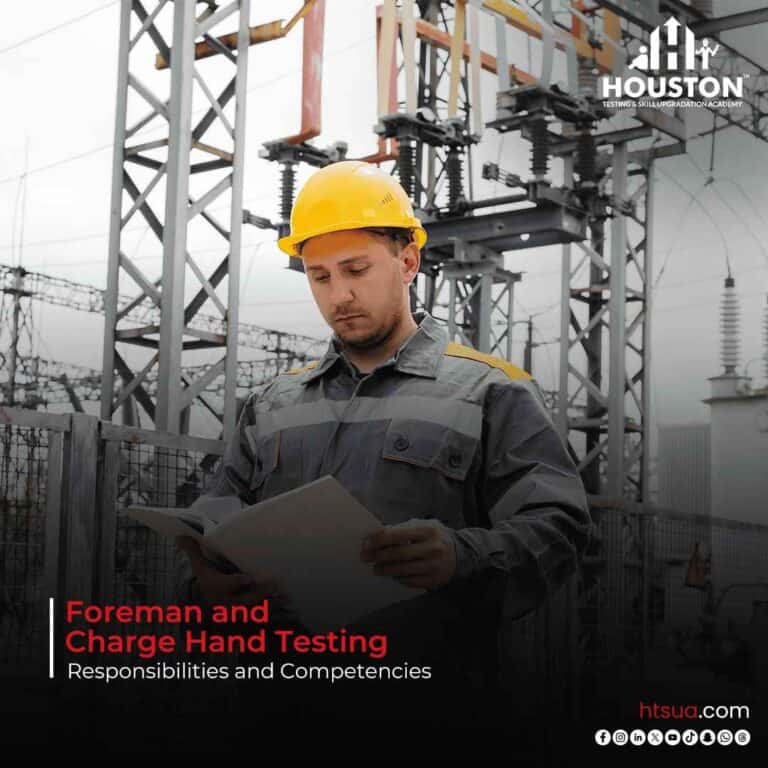
The difference between smooth execution and costly delays on any construction site, factory profile, or industrial project can often come down to supervision.
This is where skilled and experienced foremen and chargehands can make all the difference in the world.
By being the link between planning and execution, they can ensure that skilled workers, equipment, timelines, and safety guidelines come together to reduce risk and maximise productivity.
But if you think having experienced candidates in these roles is enough, it’s worth thinking again.
The Real Risk in Supervisory Hiring
As projects become more complex, employers are under greater scrutiny to ensure safety, productivity, and compliance at every stage of execution.
The ability to prove supervisory competence is now as important as having a proven track record of experience. This increases the need for structured testing and assessment for supervisory roles across construction, manufacturing, and infrastructure sectors.
How can you formally evaluate whether a candidate you’re considering to hire has the required leadership ability, technical understanding, and decision-making skills?
Through specialised foreman and chargehand testing, you can confidently make hiring decisions based on objective data.
For workers, this can provide an important validation of their skills built over years of hands-on experience. As an employer, you can now reduce hiring risk and ensure that your supervisors meet pre-set competency standards.
In this blog, we cover the responsibilities of foremen and chargehands in great detail. You will also understand why testing matters and how you can better assess core competencies through formal evaluations.
Let’s dive in.
Take the next step toward better opportunities and recognised trade supervision.
A] What Are Foreman and Chargehand Roles?
Both foremen and chargehands hold supervisory responsibilities as part of their primary roles. Where they differ is in the scope and focus of their duties, which could vary based on the project and industry.
1. The Role of a Foreman
A foreman will typically have to supervise an entire section of work or a full site operation. Additionally, they will be responsible for:
- Planning daily activities,
- Coordinating resources,
- Monitoring progress, and
- Ensuring work is completed safely and according to specifications.
Any candidate you decide to hire as a foreman should be able to balance technical knowledge, leadership, and coordination with engineers, project managers, and safety officers.
2. The Role of a Chargehand
A chargehand is usually responsible for leading a smaller team or trade group. They will work closely with the site foreman to ensure that their team’s tasks align with the broader project schedule.
A chargehand usually works closer to the tools and tasks. This allows them to ensure that the workers are maintaining the right quality standards by following the provided instructions to the T.
The chargehand role and responsibilities often involve maintaining the right discipline and productivity levels within the team. They’re primarily tasked with ensuring that the provided instructions are translated into action.
3. Why Do Both Roles Matter?
If you’re looking to hire somebody to focus on the bigger picture, timelines, coordination, and compliance, then a foreman is the right choice for your project.
If you’re looking to hire somebody to ensure that all the work is executed correctly at the task level, then a chargehand is the right option.
But to successfully complete a project, you will likely need to hire both a foreman and a chargehand and require them to function well together.
B] Why Testing and Certification Matters
Typically, supervisory roles in many industries have been assigned based on informal experience or seniority. While there is no denying that experience is valuable, it would be a mistake to consider it as a guarantee for competence or capability.
This is precisely why structured assessment is becoming increasingly critical in modern workforce recruitment and development.
1. The Need for Objective Supervisor Evaluation
You might be wondering what an objective way is to measure if a candidate is equipped to meet the expectations of your worksite.
This is where trade testing for foremen and chargehands comes into play.
2. What Foreman and Chargehand Trade Testing Evaluates
Through these assessments you will be able to evaluate a candidate’s:
- Practical skills,
- Understanding of safety procedures,
- Communication ability, and
- Leadership under real-world conditions.
3. Benefits of Trade Testing for Workers and Employers
From the perspective of prospective workers on your site, a trade test certificate validates their skills and experience and converts it into a recognised credential. This can improve their chances of becoming employable for large-scale or overseas projects.
As an employer you will now be able to hire certified supervisors who will help:
- Reduce project risk,
- Improve productivity, and
- Ensure compliance with industry standards.
4. Long-Term Value of Hiring Certified Supervisors
The foreman and chargehand certification benefits can also extend beyond hiring.
By hiring certified, competent supervisors, you ensure your teams are managed with maximum efficiency. The candidates you hire should be able to enforce safety rules consistently and resolve on-site challenges without escalation.
This will allow you to save both cost and time over the duration of the project.
C] Key Responsibilities Evaluated in Testing
How can I evaluate whether a candidate is capable of performing their on-the-ground responsibilities they will encounter every day on the job?
It’s a question that you wrestle with every time you decide to hire somebody in a supervisory role.
And you’re not alone.
It’s on the mind of every site owner or hiring manager.
Now, it’s possible to evaluate these factors that directly impact site performance and workforce safety.
1. Assessing Leadership and Team Management Skills
One of the critical aspects of evaluation revolves around leadership and team management. Candidates are tested on how they allocate tasks, monitor team performance, and deal with pressure or conflict scenarios.
For a candidate to exhibit strong foreman responsibilities and competencies, they should be able to keep their teams productive without compromising their morale or on-ground safety.
2. Evaluating Technical Knowledge and Job Understanding
Another critical aspect of evaluation revolves around technical understanding.
Candidates are tested on their ability to:
- Interpret drawings,
- Understand job specifications, and
- Guide workers in proper methods and tool usage.
If they’re able to display these qualities, you can rest assured in the knowledge that their work meets the required compliance and quality standards.
3. Evaluating On-Site Communication
Communication is also closely assessed.
Any candidate you hire must be able to:
- Give clear instructions,
- Coordinate with other teams, and
- Report progress or issues accurately.
4. Reviewing Safety Awareness and Risk Management
Perhaps the most critical component of evaluating candidates revolves around safety management. A supervisor should be able to:
- Identify hazards,
- Enforce safety procedures, and
- Respond appropriately to incidents.
A single lapse can lead to disastrous consequences, compromising crew safety and the integrity of the project.
5. Trade-Specific Competency Assessment
Finally, the evaluation will test for trade-specific responsibilities, recognising that the requirements from a supervisor can differ across electrical, mechanical, civil, and industrial roles.
D] Core Competencies and Skills Required
1. Leadership as a Core Evaluation Pillar
Testing doesn’t just focus on daily responsibilities; it also evaluates whether a candidate can exhibit the necessary leadership skills to manage teams under real on-ground conditions.
Foreman competencies and skills are not just evaluated on what the candidates know but also by how they can translate this knowledge into action on site.
This is why leadership remains a very central evaluation pillar of this process.
2. Decision-Making and Accountability Under Pressure
Prospective candidates must be able to exhibit their decision-making, accountability, and the ability to manage teams through challenges without constant oversight.
They should also be able to demonstrate problem-solving abilities. Supervisors are often the first port of call when plans change and unexpected situations arise, and they must be capable of adjusting on the fly without compromising the project schedule.
3. Evaluating Technical Competence on the Ground
Technical competence is another important core competency or skill that is evaluated through testing.
To earn respect on the ground, your supervisor must be able to execute the work at a practical level. They should also be able to intervene and guide the team through any quality or safety issues that may appear.
4. Chargehand–Specific Competency Focus
For any chargehand in particular that you’re looking to hire, this competency assessment will give you clear insight about how they focus on:
- Task execution,
- Team coordination, and
- Adherence to instructions.
By demonstrating these capabilities, you can be confident in your hired supervisor’s ability to manage people, timelines, and safety-critical responsibilities.
Ready to validate your supervisory skills with an industry-recognised assessment?
Conclusion
As an employer, it is important to remember that hiring for supervisory roles is about more than just experience; it’s also about proven capability.
Structured foreman and chargehand trade testing now provides you with a reliable way to evaluate whether a prospective candidate is capable of:
- Leading teams,
- Managing risks, and
- Delivering quality outcomes in demanding environments.
For workers, they will now be able to get recognition, credibility, and better career opportunities through testing.
For employers like yourself, it’s now possible to ensure that the candidates you hire can be relied upon to maintain safety, productivity, and compliance at the worksite.
HTSUA, known as the best trade testing centre in India, is ready to help you meet the industry’s rising expectations by building the skills needed to be the top choice of recruiters across the globe. Contact us now!
Categories
Latest Post




July 9, 2026