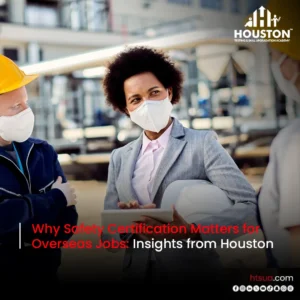
Houston

International Employee Certification Programmes: Best Practices for Preparing International Hires

International Employee Certification Programmes: Best Practices for Preparing International Hires

International Employee Certification Programmes Best Practices

Geography is no longer a barrier to sourcing top-tier talent. Companies are picking up talent from across the globe. But how?

Enter international employee certification programmes.

They are the secret sauce for making the hiring process smoother. Having a trade testing certification shows that you are ready for the job. Even for employers, prioritising workforce certification means their teams will hit the ground running quickly.

However, getting employed isn’t the sole purpose of this certification. There is a lot more to it. So, in this blog, let us look at these training programmes in detail.

Ready to work abroad? Get certified with HTSUA and turn your skills into global career opportunities.

A] Understanding the International Employee Certification Programme in the Global Context

1. What Are Certification Programmes?

Certification programmes for foreign workers are structured sessions that combine hands-on training and formal assessments to validate skills before deployment. These aren’t fluffy courses. They are rigorous training sessions designed to test real-world competency across different trades.

Completing these programmes sends a clear signal to employers, saying this candidate is job-ready, not just qualified on paper.

Unlike general education courses, certification programmes are designed to meet the demands of international employers. Each session is designed to close the gap between a tradesperson’s existing experience and the verified proof of competency required by global job sites.

2. The HTSUA Advantage

Houston Testing & Skill Upgradation Academy (HTSUA) is India’s powerhouse for trade testing. With Takamol-certified instructors and a massive 15,000+ sq. ft facility, our training programmes feature expert-led sessions. This gives candidates everything they need under one roof.

For companies, hiring an HTSUA graduate is more than a recruitment choice. It is a strategic investment. This is because we ensure every hire arrives with the credentials and confidence to deliver immediate value.

B] The Stakes: What Employers Stand to Gain

1. Better Performance and Engagement

Many workers with 8-10 years of experience are surprised to learn that overseas employers still require standardised trade testing. Why? International hiring managers cannot personally verify your previous job sites.

HTSUA’s Takamol’s Skill Verification Programme (SVP) is specifically designed to validate competencies for the Saudi labour market. Our certification programmes for foreign workers provide structured, third-party validation. They show employers that your wiring, panel installation, and safety practices align with global benchmarks, not just local norms.

2. Reduced Compliance Risks

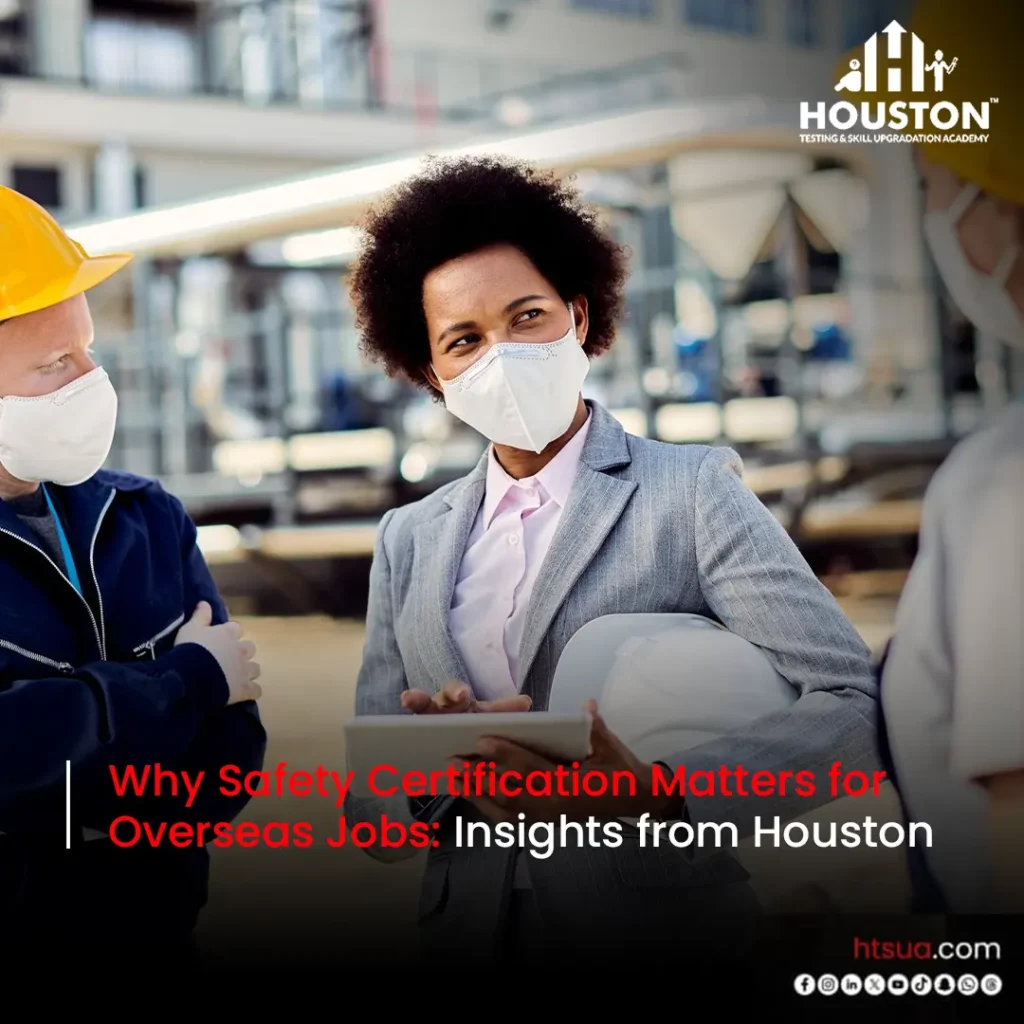
Safety is serious business on international job sites. Electrical safety and fire prevention training are mandatory before workers step on-site. Candidates without these certifications are frequently passed over, even if they have years of experience.

International employers don’t just want skilled workers. They want safe, compliant, job-ready professionals.

C] Best Practices for Preparing International Hires

1. Conduct a Skills Audit

Before enrolling in a certification programme, you need to evaluate your current skills. It can help if you compare your experience with the job’s requirements and regulatory standards. This will help you identify gaps in safety training, equipment handling, or documentation.

The early assessment will help you choose the right training modules and ensure you are aligned with the employer’s expectations from the start.

2. Prioritise Practical Training Over Theory Alone

International employers care about what you do, not what you can memorise. Can you wire a commercial distribution board safely? Can you solve a problem in a limited time?

The best training programmes for foreign workers involve a lot of hands-on sessions. So, choose the ones that feature workshops and real-world testing, not just classroom lectures.

3. Understand Your Preferred Country’s Certification Requirements

Certification rules vary by country. Gulf nations tie work visas to Takamol-approved skill verification. Meanwhile, nations like Canada and Australia use structured, points-based immigration systems.

Before investing in training, research your target country’s working requirements. HTSUA’s training programmes have a lot of credibility in foreign countries. So, your certification will be accepted when it matters most.

4. Get Documented: Paperwork Matters as Much as Skills

Once you have your trade certificate, you need to maintain copies of your experience letters from your previous jobs, along with your passport documents. This is because international hiring processes have a lot of verification stages. In global hiring, documentation is not just a piece of paper; it is credibility.

D] The Role of HTSUA in the Certification Ecosystem

1. Leveraging Takamol-Certified Training

For professionals looking to find jobs in the Middle East, like Saudi Arabia, the Takamol (SVP) certification is the gold standard. HTSUA offers the best practices for training global employees. Our training programmes go beyond the simple “pass/fail” testing with trainers acting as mentors and guiding candidates through specific technical nuances and safety protocols. This ensures that when you get a job in the Gulf, you aren’t just certified; you are truly prepared.

2. Expert-Led Sessions and Technical Engineer Support

The “expert-led” model at HTSUA is built on the philosophy that you should learn from those who have already done the work. The academy employs engineers and technical specialists who have years of on-ground experience. These instructors possess insider knowledge. This allows for deep-dive sessions where candidates learn more than just how to wire a circuit or wield a pipe. In our sessions, you will learn the specific site conditions and troubleshooting steps that are staples in global industrial hubs.

3. Job Opportunities: Connecting Skills to Opportunity

Certifications act as a powerful catalyst for career advancement. In a competitive market, a trade test certificate from a recognised facility like HTSUA serves as a “verified badge of quality” that global employers trust. With these credentials, you can increase your visibility to international companies that are looking to minimise hiring risks.

Take the next step in your career. Earn an internationally recognised certification and unlock high-paying jobs worldwide.

Conclusion

The global demand for skilled workers has never been greater. With thousands of openings every year and rapid industrial growth, the window of opportunity is huge.

Indian workers already possess the technical foundation. But skill sets don’t automatically land you jobs overseas. What employers want is certifications that back your experience.

So is your goal to build a stable, high-paying international career? You need to invest in validated skills through a credible pathway like HTSUA.

Explore some of our international employee certification programmes at https://htsua.com/ and move forward with clarity and global credibility.

A Detailed Guide to Plumbing Trade Certification for Employment

A Detailed Guide to Plumbing Trade Certification for Employment

A Detailed Guide to Plumbing Trade Certification for Employment

Plumbing skills are gold in today’s market. With buildings coming up in every corner and homes always needing fixes, skilled plumbers are in high demand. Research data shows that plumbing jobs are expected to grow, thanks to new construction and ageing infrastructure.

If you’re already a trade worker, picking up plumbing skills opens the door to bigger projects and better pay. But having skills is not enough; you need to have certifications to back them up.

That’s where HTSUA steps in. Being the best trade testing centre in India for plumbing certification and training, we turn your practical skills into credentials that employers won’t overlook.

So, are you ready to take your career to new heights? In this blog, let us look at plumbing certification and career opportunities in detail to understand their worth.

Ready to turn your hands-on skills into real opportunities? Enrol with HTSUA today and get certified for bigger, better-paying plumbing projects.

A] What Is Plumbing Certification and How HTSUA Helps

1. Theory and Practical Plumbing Certification Explained

Plumbing certification is proof that you have hands-on experience, along with knowing the theory behind it. It’s not just a piece of paper; it is a validation of practical skills mixed with theoretical competence. This bridges the gap between what you can do in the field and what bosses expect.

For an employer, hiring a certified professional isn’t about just getting the job done; it is about peace of mind, knowing they won’t be dealing with any midnight emergencies or failed safety inspections. If you are looking from your wallet’s perspective, certified plumbers earn more than their uncertified peers. This kind of levelling up can change your whole career.

2. HTSUA’s Approach to Plumbing Certification

HTSUA takes a no-nonsense approach to plumbing testing and certification services. We stick to global standards with tough assessments that mimic real jobs. Think of the assessments as a “stress test” for your career. You’ll be pushed to prove you can handle everything from precision fittings to fixing high-pressure leaks.

HTSUA sticks to rigorous global standards because the certifications aren’t just a badge; they are a guarantee. It tells the contractors and site managers that you’ve already hit the industry benchmarks.

B] Pathways to Plumbing Certification

Getting certified isn’t a mystery. HTSUA lays out clear paths from training to the finish line.

1. Hands-on Training Courses

HTSUA’s practical plumbing certification course dives into maintenance and construction plumbing. You will cover everything from basic repairs to full installations in practical workshops packed with real-world scenarios. This can change the game for you, as you’ll be able to tackle systems without calling in extra help.

2. Trade Testing and Assessment

Structured testing is key to trade certification. It weeds out the amateurs from the professionals. HTSUA’s trade testing breaks your skills down to the granular level; can you bend pipes with precision? Can your systems hold up under a high-pressure stress test?

Our facilities are built specifically for this, featuring spacious bays and professional-grade tools. Passing here means you’ve passed a plumbing workshop with a certificate that stands up to industry scrutiny.

3. Technical Interview Facilities

HTSUA doesn’t stop at skills; we prep you for the job hunt with technical interview facilities. Professionals will grill you on scenarios, from code questions to fix-it stories. This technical evaluation is designed to boost your placement success, ensuring that when you sit down for a real job interview, you speak what the employers want to hear.

C] Benefits of Plumbing Certification for Professionals

Here is how getting certified with HTSUA actually changes your career –

1. Wide Range of Certified Plumber Job Opportunities

Certified plumbers stand out in employer lists for their reliability and competency. If you are an electrician, adding a plumbing certification increases your portfolio of work. You stop being a single-trade specialist and turn into a multi-tool professional who can bid on full MEP (mechanical, electrical, and plumbing) contracts.

2. Global and Job-Ready Credentials

One of the biggest perks of HTSUA certifications is that they are built to meet international standards. This is a massive advantage if you have your sights set on working overseas. A global credential ensures you’re job-ready the moment you step off the plane, whether it’s high-end residential fixes or massive industrial set-ups.

3. Higher Confidence and Skill Diversity

There is a specific kind of confidence that comes from knowing you can handle a multi-storey drainage system or a complex industrial valve without any problems. For professionals, this skill diversity does not just get you hired; it keeps you employed through every market up and down.

D] The Structure of HTSUA’s Plumbing Certification Program

1. Curriculum and Modules Covered

HTSUA’s curriculum hits core practical plumbing topics, including

  • Pipe fitting
  • Installation
  • Drainage
  • Safety protocols
  • Code basics

During these practicals, you will also learn safety protocols to avoid real-world mishaps. You can even branch out into specialised paths like fire protection systems or green plumbing. Our curriculum is a tailored experience designed to make you a certified plumbing standards course graduate.

2. Assessment and Testing Criteria

You’ll be performing live installs and navigating theoretical checkpoints on regulations and trade math. HTSUA’s scoring methodology is completely transparent. You either hit the benchmark or you identify exactly where you need to improve. Our assessments are about skill mastery, not just passing a test.

3. Certification Recognition, and Records

HTSUA ensures that every candidate receives official and verifiable proof of their skills. Once a candidate successfully completes the required trade tests and assessments, HTSUA issues a formal certificate that confirms competency according to defined industry standards. This recognition helps employers quickly understand that the candidate has passed the structured, skill-based evaluation.

E] How HTSUA Supports Your Certification Journey

1. Expert Trainers and Facility Resources

HTSUA pairs you with experienced instructors who have decades of on-site experience. These mentors are adept at spotting technical errors. So, you will be learning a lot from them before your final exam. Our facilities also have top-tier gear for practical tests and simulations. It’s the closest you can get to a real job site without actually being on the clock.

2. Job Assistance and Placement Support

HTSUA provides job assistance and placement support post-certification. Our employer network, spanning contractors to corporations, prioritises certified graduates. They trust our standards. We don’t just hand you a skilled plumber certification. We also help you get opportunities to find your new office.

3. Flexible and Accessible Training Locations

HTSUA’s centres span cities like Mumbai, Delhi, Gorakhpur, Hyderabad, Sikar, and Patna, making training accessible. We also offer flexible schedules to fit your training into your schedule. Whether you’re looking to change careers or add a second trade to your belt, HTSUA’s plumbing skills certification for employment is just a short commute away.

Don’t just work, stand out. Join HTSUA’s certification programme and step confidently into high-demand plumbing roles across India and beyond.

Conclusion

Plumbing certification boosts employability. It backs hands-on talent with credentials that scream “Hire me.” It also expands options for professionals in different trades into versatile roles with better pay and stability.

So, don’t sit on your potential; take the next step with HTSUA’s job-ready plumber certification today. Enrol, certify, and build the career you deserve.

Electrician Skill Testing and Certification: Achieving Job Readiness and Professional Excellence

Electrician Skill Testing and Certification: Achieving Job Readiness and Professional Excellence

Electrician Skill Testing and Certification: Achieving Job Readiness and Professional Excellence

Everybody hopes to have a secure, high-paying career so that they can enjoy a comfortable life and provide for their families. The reality though, is that a significant number of technicians in the industry are not achieving the professional success they had hoped for.

Can you guess the biggest reason why such a large proportion of electricians are dissatisfied with their career progression?

Lack of validated skills.

Simply put, a number of workers in the trade are relying solely on their years of service and are taking no steps whatsoever to certify their expertise. They are then in for a rude shock when they realise that experience alone is no longer sufficient to meet the demands of modern, technical projects.

Easily benefit from our state-of-the-art trade testing and certification programs.

How Skill Certification Protects Your Career Growth

In today’s market, employers are under greater pressure to deliver without error, and they want verified proof of your capability before they deploy you to a site.

What options are you left with when you find yourself in such a precarious professional situation? The following spring to mind immediately:

  • Delaying your career progression.
  • Accepting lower-level roles despite your years in the field.
  • Lowering your expectations about the kind of high-value industrial projects you wish to lead.

Do not let a lack of certification hold your professional lifestyle to ransom!

Structured testing does not replace your experience; it validates it. It is advisable to start preparing for a professional skill testing scheme now to ensure your habits meet defined industry benchmarks.

A] The Benefits of Electrician Skill Testing

A skill test is basically a long-term professional plan you initiate for yourself to achieve job readiness. Many professionals still ask, “What is electrician skill testing in practical terms?” At its core, it is a structured evaluation often conducted at a specialised SVP test centre in India. It’s designed to measure whether you can perform tasks safely, accurately, and independently.

How Can Skill Testing Help You Maximise Your Career Potential?

To ensure safer infrastructure, employers are now legally and practically prioritising workers who have undergone a workplace readiness assessment.

If you say no to professional skill testing, especially one that leads to a recognised certification, it would be akin to refusing an offer of a pay rise. In high-value industrial or international environments, even minor errors can lead to serious hazards. So, unless you are content with remaining in stagnant roles, it would be unwise to opt out of formal trade testing.

B] How Do I Prepare for Electrician Skill Testing?

Managing your career path is not only complicated but also intensely time-consuming. A common question we hear is, “How do I prepare for electrician skill testing?” Preparation is the difference between a “Pass” and a “Fail”. In most professional assessments, the standards are high because there is zero margin for error in electrical work.

1. Master the Fundamentals

You must be comfortable with electrical principles. You should also possess 100% clarity on voltage, current flow, and circuit protection. While you are allowed to rely on your experience, there are limits to what “on-the-job” learning can teach you regarding the interpretation of technical drawings and schematics.

2. Perfect the Practical

Hands-on proficiency is weighted heavily. Practise these specific tasks:

  • Wiring Installations: Ensure every task is performed methodically rather than instinctively.
  • Fault Diagnosis: Master the ability to identify issues under timed conditions to simulate real assessment pressure.

3. The “Safety First” Mindset

Failure to comply with safety protocols, such as proper isolation techniques, can lead to severe consequences. Just like legal violations, ignoring safety during a test, even if the technical work is perfect, can lead to immediate disqualification.

C] Is Electrician Skill Testing Worth It?

If you are confused about whether or not you should stay as you are or seek certification, don’t be. Remember that for most people, skill testing is a great idea, especially if you aim to work on large infrastructure projects or international assignments.

1. Financial Appreciation and Stability

Industry data shows a marked change in earnings and stability once a worker is certified:

  • Unverified Electricians: Often limited to informal settings with unpredictable income.
  • Certified Technicians: Entitled to higher-tier contracts because their certification reduces employer risk.
  • Professional Excellence: Leads to repeat contracts and access to more complex, higher-paying assignments.

Professional Credibility

By offering your potential employer a verified skill card, you show your seriousness and commitment to professional standards. It demonstrates that you are prepared to make a long-term investment in your future. Possessing such accreditations shows that you are interested in moving from “accidental” growth to “structured” success.

D] The Responsibilities of the Employer

A job readiness assessment for electricians is not just for the worker; it is also a vital metric for the employer. Every firm is now looking to maximise adherence to safety legislation and project predictability.

1. Penalty for Non-Compliance

If a company fails to employ certified staff for critical industrial roles, they face the very real prospect of project delays or safety violations. The “regulators” of industry standards may observe:

  • Compliance Gaps: Identifying weaknesses in the workforce that lead to costly errors.
  • Supervision Intensity: Non-certified staff require more constant supervision, which drains company resources.

2. Managing Skill Continuity and Compliance

Managing a team of technicians is not only complicated but also intensely time-consuming. It is a legal and operational responsibility for every employer to ensure that their staff’s certifications are kept up to date.

You must assess your workforce regularly to identify whose credentials are about to expire, as deploying a technician with lapsed certification is a risk no professional firm should take. To avoid a rude shock during a safety audit, employers should implement a structured tracking system.

E] Achieving Professional Excellence with Houston

At Houston, we believe in making the entire trade testing and certification process as easy as possible for our clients. We will set up your assessment in a matter of minutes to ensure you are ready for deployment.

We will continually assist you with your professional requirements in the following ways:

  • Automatically assessing your technical competence against real-world scenarios and site realities.
  • Providing state-of-the-art facilities that reflect actual job conditions, ensuring your skills can withstand the pressure of live projects.
  • Validating safety discipline so that your working habits align perfectly with modern industry benchmarks.
  • Many other easy-to-use value-added services to help you strengthen your professional standing.

Take the next step toward verified capability and professional recognition.

Conclusion

Professional excellence in the electrical trade is not defined only by your years on the tools; it is defined by consistency, safety awareness, and accountability. As we have seen, the reality of the modern industry is that experience alone is no longer enough to secure the standard of career you desire. By pursuing structured testing and certification, you are essentially initiating a long-term plan to protect your professional future. Whether you are a worker looking to boost your salary or an employer needing to ensure a capable and compliant workforce, taking action today ensures you won’t face a precarious situation tomorrow.

Houston’s Role in Shaping the Future of Global Workforce Development

Houston’s Role in Shaping the Future of Global Workforce Development

Houston’s Role in Shaping the Future of Global Workforce Development

If you’re running international projects today, you’ve probably noticed something. Hiring is no longer just about filling roles. It’s about managing risk before it reaches the site.

As projects get bigger and margins become tighter, safety scrutiny is higher than ever. At the same time, the workforce is more global than it has ever been, with skill sets now required to move across borders faster than standards do.

This creates a gap, which slowly but surely will start showing up on your projects.

Workforce development can’t just mean training anymore. It has to mean preparing workers for real job conditions, international expectations, and consistent performance. This is where Houston has focused its efforts on not just producing talent but on making sure that talent is truly ready.

Build a future-ready workforce with verified skills and consistent global standards.

A] The Global Workforce Problem Employers Are Facing

If we’re being honest, the shortage of skilled labour is not news anymore. What is new is the scale of impact it’s having.

Talent shortages continue to be recognised as a major risk to global growth. Construction, manufacturing, and energy sectors feel this the most, as employers are forced to hire across borders because local supply simply isn’t enough.

But hiring internationally brings unpredictability. With differing training standards and evaluation of experience, the safety culture varies from region to region. A worker considered highly skilled in one country may struggle in a regulated, high-pressure environment elsewhere.

This mismatch is one of the biggest hidden risks in global projects. It affects productivity, quality, and safety. It also often only becomes visible after workers are already deployed.

That’s why workforce development now has to focus on alignment, not just availability. By understanding how these global skills trends are shaping workforce development, your organisation can bridge the gap between regional training and international project demands.

B] Why Traditional Workforce Development Models Fall Short

For years, workforce development meant training programs and certificates. Complete the course, receive the qualification, and move into the job market.

The problem is that certificates don’t always equal competence. Paper qualifications can be misleading. Two workers may appear equally qualified, yet respond very differently once exposed to real site conditions.

Employers often uncover these differences through rising supervision needs or early quality and safety concerns, at a stage when fixing the issue is far more costly than preventing it.

At Houston, we recognised early that workforce development needed another layer. Training alone prepares people, and validation through certification programs proves readiness.

That shift from training-led to assessment-backed workforce development is shaping the future of how industries manage talent globally.

C] Houston’s Focus: From Skill Development to Skill Readiness

When we talk about Houston’s role, it comes down to one core principle. Workforce capability must be measured, not assumed.

Houston supports workforce development by building structured assessment systems that mirror real job environments. Instead of focusing only on what workers have studied, we focus on what they can actually do.

This includes practical trade testing, safety understanding, and supervisory readiness where required. The goal is not to eliminate training, but it’s to make sure training results in performance.

For employers, this approach can change the hiring equation entirely. It reduces uncertainty before deployment and gives your hiring teams documented evidence of competence. It helps ensure that workers arrive prepared and are not learning critical skills on live projects.

That difference has a direct impact on productivity and risk management.

D] Supporting Global Standards in a Mobile Workforce

The modern workforce is mobile, as workers now move from country to country based on project demand. That mobility is good from a talent access standpoint, but it also creates inconsistency in standards.

Lacking common benchmarks, you are left with documentation that fails to reflect the specific worker expectations of your country. This can create gaps in safety, quality, and compliance.

Houston helps close that gap by applying consistent, standardised testing frameworks. These assessments are designed around industry requirements, not just local training systems. This allows you to compare skills across regions using a common reference point.

It also helps recruitment agencies present candidates with credible validation. Instead of relying on claims, they can show proof of tested ability, which helps build trust across the hiring chain and strengthens project readiness.

E] Strengthening Employer Confidence Through Independent Validation

One of the biggest challenges in global workforce development is trust. Employers need to trust that their workers are capable, and clients need to trust that employers have done their due diligence.

Houston’s structured assessment model supports this trust. Evaluations are practical, documented, and repeatable, focusing on real tasks, real tools, and real safety procedures.

This level of validation strengthens accountability at every level. Employers can show that workforce quality has been independently assessed. Recruitment partners can demonstrate higher standards, and project owners gain confidence in delivery capability.

In today’s environment, where compliance and safety audits are common, this kind of documented validation can be a big competitive advantage for your organisation.

F] Building Workforce Pipelines for the Long Term

Workforce development should always support long-term planning and not be reactive.

Houston contributes by helping you build repeatable, standardised talent pipelines. Once workers are assessed against consistent benchmarks, they become part of a verified talent pool, which will make it easier to redeploy them across projects more efficiently.

It can also help your organisation forecast your workforce needs with greater confidence. Instead of restarting the validation process each time, you are now able to rely on previously tested capability.

Over time, this leads to stronger workforce stability. Your teams can perform more consistently with reduced onboarding time. Additionally, leadership can focus more on delivery and less on troubleshooting skill gaps.

G] Driving Safer and More Productive Job Sites

At the end of the day, workforce development must translate into better outcomes on site.

Gaps in capability often become visible through safety performance and reduced productivity. Insufficient preparation increases the likelihood of equipment misuse, procedural errors, and operational delays.

By applying an assessment-led approach before deployment, Houston enables early identification of weaknesses, helping employers address issues in advance rather than on live projects. It also supports a culture where competence is expected, not assumed.

Build a future-ready workforce with verified skills and consistent global standards.

Conclusion

The future of global workforce development will not be defined by how many people are trained. It will be defined by how many are truly ready.

As industries grow more interconnected, employers need more than access to labour. They need confidence that workers can meet international expectations for safety, quality, and performance.

Houston’s role in shaping this future comes from focusing on validation as much as development. Houston’s approach brings together assessment and workforce preparation to ensure global talent is truly ready for deployment. 

Moving from assumption to evidence is what will define effective workforce strategies going forward. If your organisation is building long-term capability through skill validation and focused skill development courses in Mumbai, we invite you to speak with our team.

Why Mechanical Trade Testing Matters: Process, Evaluation, and Certification Benefits

Why Mechanical Trade Testing Matters: Process, Evaluation, and Certification Benefits

Why Mechanical Trade Testing Matters: Process, Evaluation, and Certification Benefits

If you’re hiring mechanical workers for construction, manufacturing, oil and gas, or large infrastructure projects, you’ve probably faced this familiar dilemma. A technician looks experienced on paper. Interviews suggest confidence. The project timeline is tight, so you move quickly.

Then, once the project begins, equipment handling errors appear. Maintenance cycles slow down. Safety deviations increase. Productivity targets start slipping.

Across construction and heavy engineering sectors, international and large-scale mechanical hiring has become unavoidable. Skill shortages are real. Project complexity is rising. Safety and compliance expectations are stricter than ever. Yet margins are thinner.

This is why more employers are shifting away from assumption-based recruitment toward structured skill verification. At the centre of this shift is mechanical trade testing and certification.

From our experience at Houston Testing Upgradation Academy, one truth stands firm: the cost of hiring wrong mechanically is always higher than the cost of testing right.

Verify Skills Before Deployment with Recognised Certification

A] Strategic Importance of Mechanical Trade Testing

Before diving into processes and certifications, it’s important to understand what is mechanical trade testing and why it matters so deeply in today’s projects.

Mechanical trade testing is a structured evaluation of a worker’s practical skills, technical knowledge, and decision-making ability related to mechanical trades. It verifies whether a candidate can safely and effectively perform tasks such as equipment installation, alignment, maintenance, diagnostics, and troubleshooting.

In mechanical-intensive industries, performance errors don’t just reduce productivity. They create safety risks, equipment damage, downtime, and regulatory exposure.

This is why employers are no longer asking whether to test. They’re asking how do mechanical trade tests work and how to integrate them into hiring strategy.

B] What Goes Wrong Without Mechanical Skill Verification

1. Where Most Mechanical Hiring Failures Begin

Most failures don’t start with dishonesty. They start with assumptions:

  • Assuming years of experience equal technical competence.
  • Assuming certificates reflect real hands-on ability.
  • Assuming interviews predict on-site performance.

2. The Cost of Skills Mismatch in Mechanical Roles

In mechanical environments, a skills mismatch becomes visible very quickly. Improper torque application damages machinery. Incorrect alignment causes vibration and breakdowns. Poor diagnostics lead to repeated downtime.

This is exactly why mechanical trade testing for construction workers has become essential. Without structured testing, employers only identify weaknesses after equipment is already operational.

3. What Happens Without Structured Assessment

Without mechanical trade testing, organisations commonly face:

  • Frequent rework and maintenance failures.
  • Higher accident and near-miss rates.
  • Extended commissioning timelines.
  • Loss of client confidence.


These problems don’t appear in recruitment dashboards. They appear as project delays, warranty claims, and safety incidents.

C] Step-by-Step Mechanical Trade Testing Process

Understanding the step-by-step mechanical trade testing process helps employers see how testing creates predictability before deployment.

Step 1: Role-Specific Skill Mapping

The process begins by defining the exact competencies required. A fitter, millwright, HVAC technician, or maintenance engineer requires different benchmarks.

Step 2: Theoretical Knowledge Assessment

Candidates are evaluated on technical fundamentals, safety principles, equipment understanding, and fault analysis.

Step 3: Practical Trade Simulation

This is the core of the process. Candidates perform real mechanical tasks under observation, such as assembly, alignment, calibration, maintenance, and troubleshooting.

Step 4: Safety and Compliance Evaluation

Safe work practices, tool handling, understanding of lockout/tagout, and hazard awareness are assessed.

Step 5: Documentation and Certification

Results are recorded, verified, and issued as auditable proof, often in the form of a recognised trade test certificate.

This structured flow is the foundation of every step-by-step mechanical trade test guide used by professional institutes like Houston Testing Upgradation Academy.

D] How Mechanical Trade Tests Are Evaluated

A credible evaluation framework measures three dimensions:

1. Technical Accuracy

Precision in measurement, assembly, alignment, and installation is assessed against industry tolerances.

2. Process Discipline

Candidates are evaluated on procedure adherence, sequencing, tool selection, and documentation.

3. Safety Behaviour

Safe equipment handling, hazard recognition, and compliance with safety protocols are closely observed.

This structured scoring ensures objectivity. It eliminates guesswork and ensures that only truly competent workers are certified.

This is also how mechanical trade tests work in professional assessment environments: performance is measured, not assumed.

E] Benefits of Mechanical Trade Certification

Employers increasingly recognise the long-term value of certification-backed hiring. The benefits of mechanical trade certification extend far beyond recruitment.

1. Improved Productivity and Faster Deployment

Certified workers reach productivity benchmarks faster. They require less corrective supervision and adapt more quickly to site procedures.

2. Reduced Safety and Equipment Risk

Competency-based selection lowers accident rates, equipment damage, and warranty claims. Workers understand not just how to perform tasks, but how to perform them safely.

3. Higher Client and Regulatory Confidence

Certification provides auditable proof of workforce competence. This strengthens compliance, inspection readiness, and client trust.

4. Scalability Across Large Projects

Standardised testing allows consistent quality across regions and workforce batches. This is essential for multinational contractors.

These are the core benefits of mechanical trade certification that make it a strategic asset, not just a hiring tool.

F] Mechanical Trade Testing in Construction and Heavy Industry

Mechanical systems form the backbone of modern construction and industrial projects. From cranes and compressors to HVAC, piping, and rotating equipment, performance depends entirely on workforce competence.

This is why mechanical trade testing for construction workers has become standard practice in high-risk, high-value projects.

Testing ensures that:

  • Installations meet design tolerances.
  • Commissioning proceeds smoothly.
  • Maintenance cycles are predictable.
  • Safety compliance is embedded from day one.


For contractors, this reduces project overruns and protects margins. For clients, it protects asset integrity.

G] Choosing the Right Mechanical Trade Test

Employers frequently ask, Which trade test is best for mechanical workers? The answer depends on role complexity, industry requirements, and destination-country regulations. The best test is one that:

  • Reflects real site conditions.
  • Measures practical performance, not just theory.
  • Aligns with international mechanical standards.
  • Produces auditable, recognised documentation.


At Houston Testing Upgradation Academy, a reliable provider of skill development courses in Mumbai, assessments are designed to mirror real mechanical environments, ensuring that certifications reflect true job readiness.

H] Why Employers Partner with Houston Testing Upgradation Academy

Not all testing institutes deliver equal value. Experience, infrastructure, and industry alignment make the difference.

At Houston Testing Upgradation Academy, mechanical trade testing is treated as a strategic workforce solution, not an administrative formality.

Employers benefit from:

  • Standardised, role-specific assessments.
  • International alignment and auditable results.
  • Scalable testing for large workforce volumes.
  • Reliable certification for deployment and compliance.


This partnership approach strengthens hiring frameworks and reduces long-term operational risk.

Verify Skills Before Deployment with Recognised Certification

Conclusion

Mechanical hiring is not becoming simpler. It’s becoming more exposed. Projects are larger, equipment is more complex, and safety expectations are higher than ever.

In this environment, resumes and interviews are no longer enough. Without verification, employers gamble with productivity, safety, and asset performance.

The best mechanical workforce strategies share one principle: skills must be tested before deployment, not after failures occur.

When mechanical trade testing and certification are integrated into hiring, projects run more smoothly. Equipment lasts longer. Safety improves. Leadership focuses on delivery instead of recovery.

That’s why employers should no longer view Houston Testing Upgradation Academy as merely a testing provider, but as a strategic partner in building reliable, high-performing mechanical teams. Contact us today!

Top 10 Certification Programs Offered by Houston for International Employment

Top 10 Certification Programs Offered by Houston for International Employment

Top 10 Certification Programs Offered by Houston for International Employment

Do you have a dream of taking your skills across borders? Perhaps to the high-rises of Dubai, the industrial hubs of Saudi Arabia, or the luxury resorts of the Mediterranean. If so, you have landed at the right place.

As a veteran in the global workforce development space, we have seen thousands of talented professionals miss out on life-changing opportunities simply because they lacked the “proof” of their prowess.

In the international labour market, talent is the engine, but certification is the fuel. At Houston, we don’t just provide papers; we provide a “Global Passport” for your career. We have certified over 35,000 candidates and are trusted by leading companies across the world.

Today, we’re going to walk you through the top 10 certification programs we offer that serve as the definitive certifications for work opportunities abroad.

Ready to turn your technical skills into a global career? Join the 35,000+ professionals we’ve already placed in top international firms

A] Top 10 International Employment Certification Programs Offered by Houston

1. Takamol Skill Verification Program (SVP)

If your goal is the Kingdom of Saudi Arabia, the Takamol SVP is not just an option; it is often a mandate. This program, a joint initiative between Takamol Holding and India’s National Skill Development Corporation (NSDC), was designed to ensure that the professional workforce in Saudi Arabia meets high-quality benchmarks.

For some professions this verification is mandatory to be considered eligible to work in Saudi Arabia. Additionally, in some scenarios failing to hold this verification can result in visa application delays or denials for specific skilled categories.

At Houston, we are an accredited centre where you can undergo this rigorous evaluation.

2. BICSc Standard Hospitality Certification

The British Institute of Cleaning Science (BICSc) is the world’s largest independent professional and educational body within the cleaning industry. Our hospitality programs for coffee maker, pizza maker, and Chinese cook integrate these standards to ensure hygiene and safety that meet European and Middle Eastern luxury benchmarks.

When a recruiter in London or Doha sees a BICSc-aligned certificate, they know you understand “The 5 Principal Criteria”: correct equipment use, safety, surface care, material care, and quality finish. This list of certifications can open global doors for you in the competitive five-star hotel sector.

3. Advanced Welding Technology (6G and Multi-Process)

Welding is the backbone of global infrastructure. However, an uncertified welder is a liability on an international site. Our program covers MIG, TIG, and ARC welding, specialising in the 6G position, which is the highest level of welding certification you can attain.

Skilled technicians in the energy and construction sectors remain in high demand despite global economic shifts. A 6G certification from Houston proves you can handle the most complex offshore and pipeline projects.

4. Electrical Safety and Trade Certification

Electricity works the same globally, but safety regulations do not. Our electrical trade certification doesn’t just test if you can wire a circuit; it tests your adherence to international hazard identification and risk mitigation protocols.

We replicate real-world field conditions in our 15,000 sq. ft facility. Holding a verified trade test certificate in this field tells your employer you are trained to avoid the electrical accidents that cost global firms millions annually.

5. HVAC and Transport Refrigeration

The “cold chain” is a multi-billion dollar industry. From pharmaceutical transport to food logistics, the world needs technicians who can maintain complex cooling systems.

The expansion of industrial zones and logistics hubs in the UAE and Saudi Arabia continues to hint at increasing demand for maintenance engineers.

Our HVAC certification is unique because it includes training on transport refrigeration units (like those from Thermo King or Carrier).

6. Scaffolding and Working at Height (OSHA Standards)

In international construction, safety is the number one priority. Our scaffolding certification covers the erection, inspection, and dismantling of scaffolds according to OSHA (Occupational Safety and Health Administration) guidelines.

As we often tell our students, “A great scaffolder doesn’t just build a structure; they build a safety net for their entire team.” This certification is highly sought after by European firms operating in the Gulf.

7. MEP (Mechanical, Electrical, and Plumbing)

Modern “smart cities” like NEOM or the Dubai Creek Harbour require professionals who understand the synergy between mechanical, electrical, and plumbing systems. Our MEP certification is a comprehensive international job certification program that prepares you for supervisory roles.

By understanding the integrated “blueprints” of a building, you move from being a simple labourer to a key project asset.

8. Civil Trades (Masonry, Carpentry, and Painting)

Even what were considered “traditional” trades at one point have now gone global. An international mason must know how to work with ready-mixed concrete and mosaic casting. An international carpenter must understand fire-rated door installations.

Our civil trade certifications ensure you are familiar with the tools and materials used in modern global construction, making you “site-ready” from day one.

9. Heavy and Light Motor Vehicle (HMV/LMV) Certification

With over 3.5 acres of dedicated training yards, our driving certification is world-class. We don’t just teach you to drive; we teach you international road safety, cargo securing, and fuel-efficient driving techniques.

The PIB India Economic Survey 2025-26 highlights that the logistics sector is a major driver of employment. For those looking abroad, our certification acts as a bridge to obtaining international driving licences in countries like Qatar or Kuwait.

10. Oil and Gas Safety Leadership

This is our most elite safety program. It is designed for those who wish to work in refineries or on offshore rigs. It focuses on high-stakes risk assessment and emergency response. In an industry where a single mistake can be catastrophic, having a “safety leadership” credential makes you a priority hire for international companies.

B] Why the Houston Seal of Approval Matters

The global market in 2026 is no longer about volume; it is about alignment. Our recent observations show that employers are increasingly focused on candidates who can fulfil clearly defined job responsibilities and demonstrate verified experience.

At Houston, we address this through:

  • Foolproof Infrastructure: 15,000+ sq. ft. of space with 1,000+ simultaneous evaluation spots.
  • Biometric Integrity: Every test is recorded via video and biometric scanning to prevent any instance of fraud.
  • Veteran Faculty: Our assessors have an average of 35 years of experience in the Gulf and European markets.

C] The Economic Reality

The ILO 2026 report notes that while global unemployment remains stable at 4.9%, the “jobs gap”, which is the number of people who want work but cannot access it, is 408 million. Why the gap? Because people have skills but not the right certifications.

Certifications can open global doors in India for those who take the leap. A certified worker from our academy isn’t just looking for a job; they are choosing a career path that offers higher wages, better legal protection, and faster visa processing.

Not sure which certification is right for your target country? Speak with our veteran career counselors to find your perfect match.

Conclusion

To all aspiring students, we would like to make it clear: your talent is undeniable, but the world is big and competitive. Give yourself the advantage you deserve. Whether you need a Takamol SVP for Saudi Arabia or a BICSc certificate for a luxury hotel in London, the right credential from the right training centre can make all the difference.

At Houston, we have the tools, the technology, and the industry connections to help you succeed. The question is: are you ready to get certified?

Need help? We're here

Get a callback from one of our expert counselors