

How to Become an HVAC Technician: The Practical Path Most People Miss
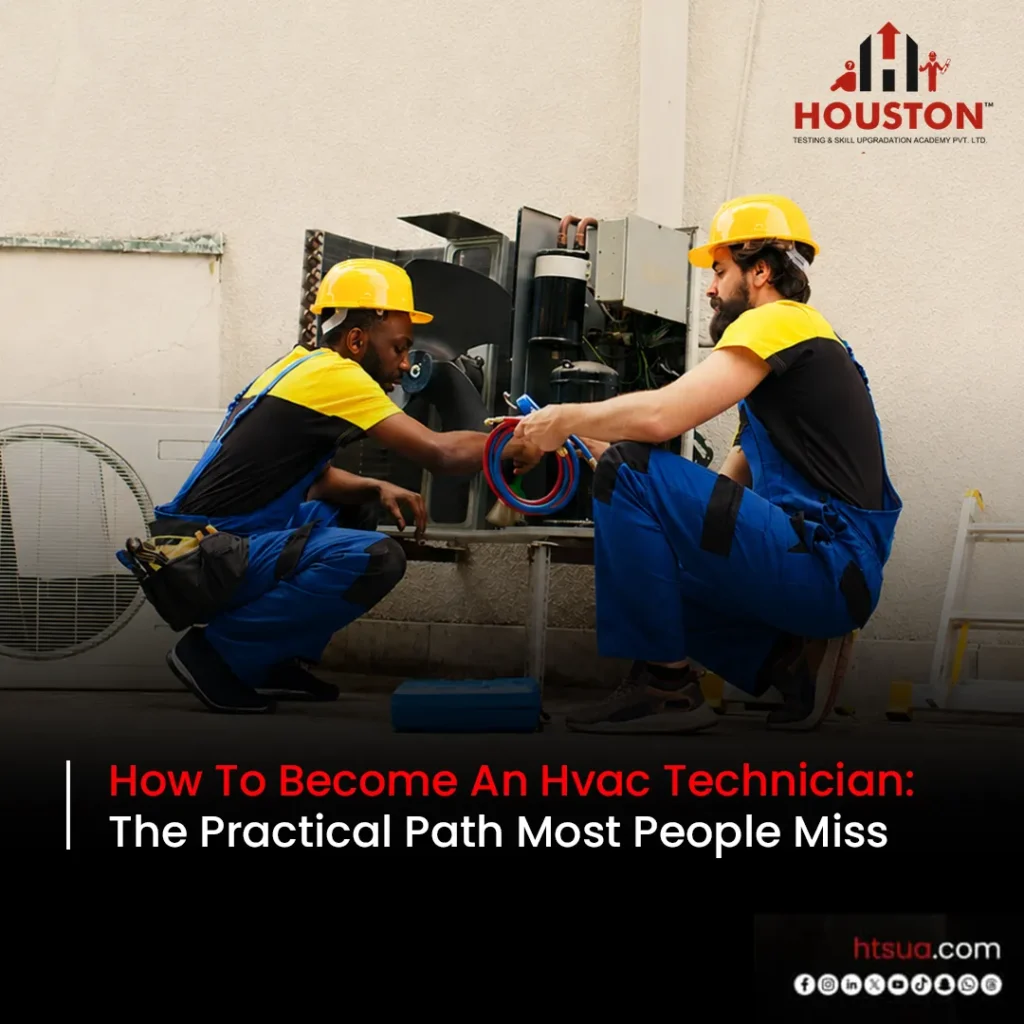
You’ve decided the office path isn’t for you. You want work that uses your hands, pays reliably, and doesn’t disappear when the economy shifts. HVAC looks like a fit: steady demand, clear skills, and real openings both at home and overseas. Then the practical questions hit. Where do you start? How long does it take? What actually gets you hired, especially for job opportunities in the Gulf?
This isn’t a vague career overview. It’s a straight HVAC training roadmap that shows the steps from zero experience to working technician, the certifications that matter, the career path most people follow, and how to position yourself for HVAC technician job opportunities in high-demand markets.
Ready to turn your skills into a recognised credential?
A] Why HVAC Remains One of the Steadiest Trade Paths
Heating, ventilation, and air conditioning systems keep buildings livable. Homes, hospitals, factories, malls, and data centres all need them running. That demand doesn’t pause. In the Gulf, extreme heat makes skilled technicians essential year-round for both new construction and ongoing maintenance.
Employers no longer hire on paper claims alone. They want proof you can diagnose a system, handle refrigerants safely, and work under real conditions. That’s why structured training followed by verified skill assessment has become the standard route. Candidates who skip the proper sequence often stall at the interview stage or fail the practical test that comes later.
A clear HVAC technician career path exists. It starts with foundational training, moves through supervised fieldwork, and opens into specialised or higher-paying roles once you have documented competence. Gulf contracts frequently add housing, transport, and medical benefits on top of salary, which is why many technicians treat international work as a deliberate next step rather than a distant hope.
B] The Core Steps in an HVAC Training Roadmap
The path is practical and sequential. Most successful technicians follow a similar sequence:
1. Meet the Basic Entry Requirements
A high school diploma or equivalent is usually enough. Basic math, the ability to read diagrams, and physical readiness for site work matter more than advanced academics. If those boxes are checked, you can begin.
2. Complete Formal HVAC Training
Certificate or diploma programmes typically run six months to two years. Good ones combine classroom theory with hands-on practice: refrigeration cycles, copper piping and brazing, electrical fundamentals, system installation, troubleshooting, and safety. Look for coverage of modern inverter units, VRF systems, and proper refrigerant handling. Apprenticeships offer a paid alternative, including three to five years of supervised work mixed with classroom hours. Both routes work. The key is real equipment time, not just theory.
3. Earn the Required Certifications
Refrigerant handling certification is non-negotiable in most markets. It proves you understand recovery, recycling, and environmental rules. Additional credentials in specific systems or safety standards strengthen your profile. For Gulf-focused candidates, skill verification under recognised frameworks becomes critical later in the process.
4. Gain Supervised Field Experience
Training alone rarely makes you fully job-ready. Start as a helper or junior technician. You learn diagnostics, customer communication, and the realities of working on live systems under pressure. Document your hours and the types of equipment you’ve handled. This record matters when you move to independent work or overseas applications.
5. Progress Along the HVAC Technician Career Path
Most people move from helper to junior technician, then to full technician handling residential and light commercial work. With experience come senior roles, lead positions, specialised work on chillers or controls, or supervisory tracks. Some eventually start their own service businesses. The ladder is clear once the foundation is solid.
C] How to Prepare Specifically for Gulf Opportunities
HVAC technician training for Gulf jobs has a few extra requirements that domestic work often skips. Employers in Saudi Arabia, the UAE, Qatar, and similar markets want verified competence, not just a local certificate.
Confirm the exact standards your target employers recognise. Many require a practical trade test or skill verification that matches their frameworks. Refresh core techniques under timed conditions. Field experience builds skill, but test conditions are different. Treat safety protocols as a graded element in their own right. A technically correct job done unsafely can still fail the assessment. Get familiar with the tools and materials commonly used at assessment centres so nothing feels foreign on the day.
Most industrial trade assessments run several hours and evaluate both technique and procedure. Candidates who prepare for the format itself consistently perform closer to their actual ability than those relying only on years of site work.
D] What to Check Before You Commit to Training or Testing
Not every programme or testing centre carries the same weight with overseas employers. Before you invest time and money, ask:
- Does the training or certification align with the standards used by Gulf employers?
- Is the assessment practical, observed, and conducted under controlled conditions?
- Will you receive clear guidance on what the test actually involves, or are you expected to walk in cold?
- Does the centre have a track record of candidates moving into real overseas roles?
A certificate only helps if the employer on the other end trusts where it came from. Skipping this check is how candidates end up with paper that opens no doors.
E] How HTSUA Helps You Move From Training to Verified Readiness
At HTSUA, we treat the practical assessment stage as the highest-leverage point in a candidate’s path to overseas work. Our programmes are built around the actual standards used by Gulf and international employers, including Takamol and NSDC-aligned frameworks. Candidates walk into the assessment already familiar with the format, the equipment, and the pace of a real evaluation.
As a recognised SVP test centre in India, we conduct structured skill verification for HVAC and related trades. Preparation covers the specific tasks employers expect, like system diagnostics, refrigerant handling, installation techniques, and safety procedures, rather than generic theory. Trainers work across the relevant specialisations so the practice matches the test a candidate will actually face.
Candidates who complete structured preparation before sitting the assessment consistently perform closer to their real capability. They lose fewer marks to nerves or unfamiliar conditions. The result is a verified credential that employers can trust, which is exactly what turns an application into an offer for HVAC technician job opportunities in the Gulf and beyond.
Go Through this Article for Detailed Exploration: Why Choose Houston for Your Skill Testing and Certification Needs?
Need help choosing the right certification path for Gulf or local roles?
Conclusion
Demand for competent HVAC technicians continues to rise, driven by construction, infrastructure, and the simple need to keep buildings cool and functional. That demand rewards verified ability, not potential. A clear training roadmap, the right certifications, field experience, and a properly recognised skill assessment are what separate candidates who get offers from those who keep sending applications.
If you’ve decided this is the path, don’t leave the final verification step to chance. Get the foundation right, prepare specifically for the assessment format, and make sure the credential you walk away with is one employers actually recognise. Reach out to the team at HTSUA to map the right preparation and testing route for where you want to go next.
Categories
Latest Post




July 9, 2026