Navigating Workforce Certification For International Hires
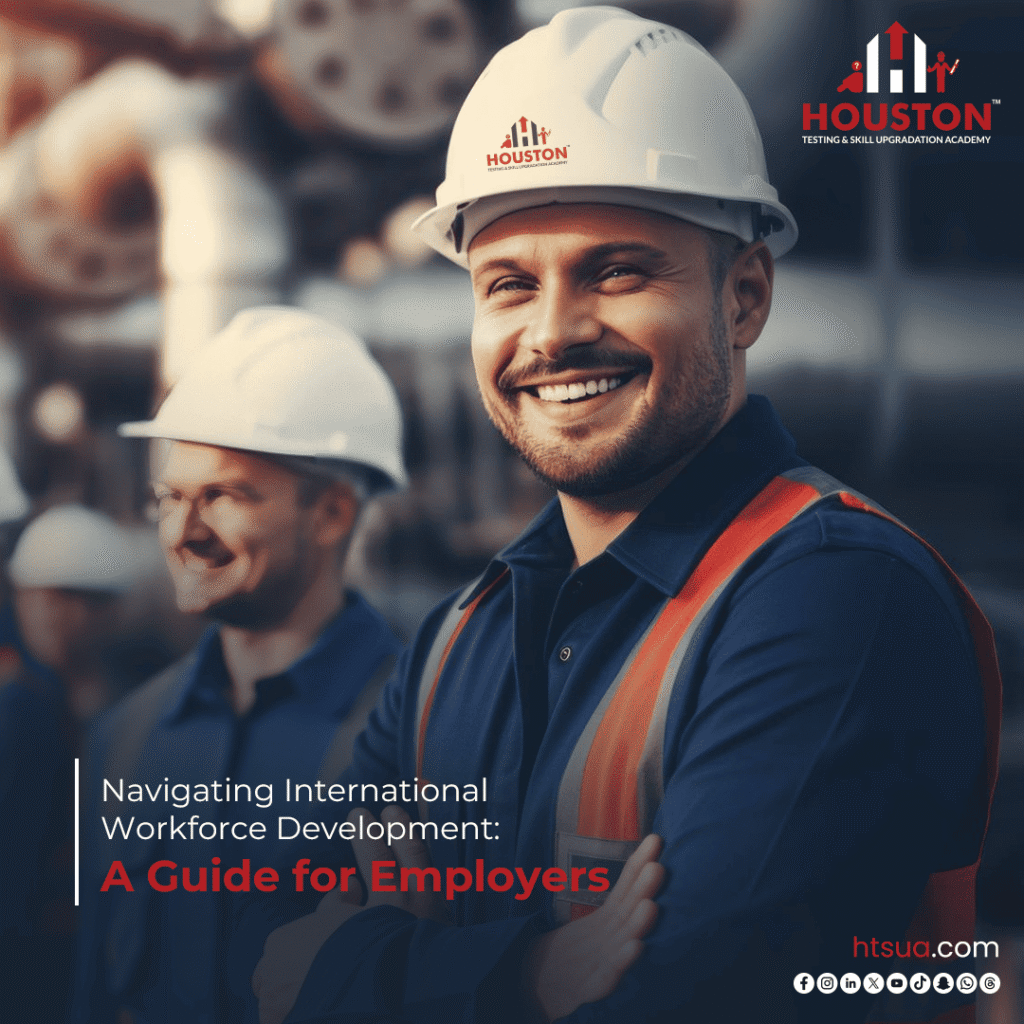
The global demand for certified blue-collar talent is rising sharply. Industrial growth, large-scale infrastructure projects, and ongoing labour shortages have led businesses to look beyond borders for skilled manpower. But hiring internationally comes with a critical challenge: ensuring your workforce is not only experienced but also certified and compliant with destination country regulations. Without proper certification, employers risk legal penalties, worksite inefficiencies, and damaged reputations.
This blog is a comprehensive guide for employers to understand the importance of certification for the international workforce and how to implement the best practices for training global employees to meet both international and local standards.
A] Why Certifications Matter in Blue-Collar International Hiring
Certifications are more than paperwork; they validate a worker’s skill, readiness, and adherence to safety standards. When you hire foreign workers for trade-specific roles like welding, electrical, plumbing, or HVAC, verified certifications ensure they’re prepared for real-world job demands.
In many countries, especially those in the Gulf region, certified workers are a legal requirement for participating in public infrastructure projects. Without it, businesses may lose contracts or face delays due to non-compliance.
From a legal standpoint, proper international employee certification programmes protect your company against liabilities, accidents, and regulatory violations. They also strengthen your brand reputation. A certified workforce reflects professionalism, quality assurance, and attention to global standards, making your company a trusted choice in the international marketplace.
To maintain consistent quality and safety standards across borders, employers must prioritise certification early in the hiring process and partner with reliable institutions for trade test certificates and pre-deployment assessments.
Looking to certify your global workforce with confidence?
B] How To Optimise Training Programs
To ensure your international workforce is not only certified but also productive and adaptable, training programs must be thoughtfully designed. Here are the best strategies:
1. Fostering Global Competence through Training Initiatives
International employees bring diverse skill sets, but they also require alignment with your work culture, language, and processes. Training programmes should integrate soft skills, safety procedures, local compliance standards, and technical upskilling. Cross-cultural competence is key, especially when teams work across geographies.
2. Strategic Planning for Pre-Assignment Certification
Before deployment, confirm that employees have the necessary skill-based certifications as per the destination country’s legal and industrial standards. Pre-assignment planning should include trade-specific assessments and certification renewal (if needed). Collaborate with testing partners like Houston Testing and Skill Upgradation Academy to ensure certifications are accurate, valid, and recognised.
3. Maximising ROI through Skill Training
Skill training is an investment that pays off long-term. A trained workforce reduces operational downtime, ensures compliance, and boosts project efficiency. By investing in certification programmes for foreign workers, employers reduce turnover and increase employee engagement. Offer ongoing training modules to help employees upskill and remain compliant with evolving industry standards.
4. Ensuring Compliance and Adherence to Standards
Each country has unique regulatory frameworks, ranging from safety protocols to technical competencies. Your training modules must reflect these standards to ensure compliance. Conduct regular audits, refresher sessions, and mock tests. Encourage employees to understand legal rights and responsibilities for a smoother integration and reduced legal risks.
5. Develop Training Programs for Multiple Languages
Language should not be a barrier to learning. For effective knowledge transfer, provide training material in regional languages. This improves understanding, boosts confidence, and reduces safety risks, especially in labour-intensive fields. Multilingual trainers and subtitled videos are great options.
6. Provide Clear Learning Objectives
Each training session must have well-defined learning outcomes. Employees should know what they’re expected to learn and how it impacts their role. Objectives help trainers measure performance and align content with business goals. Setting clear goals enhances motivation and accountability.
7. Use Learning Management System (LMS)
Adopt a digital LMS platform to streamline training delivery, track progress, and offer flexibility to international employees. With an LMS, you can personalise content based on job roles, automate certification tracking, and enable remote learning, making it an ideal solution for globally dispersed teams. An LMS also ensures documentation, which is crucial for audits and inspections.
By following these best practices for training global employees, employers create a workforce that is skilled, certified, and confident in delivering top performance across borders.
Also Read: The Role of Civil Trade Testing and Certification for Blue-Collar Professionals
C] How Can Houston Be Your Partner in International Workforce Development?
When it comes to workforce certification for international hires, Houston Testing and Skill Upgradation Academy is your trusted partner. We offer a wide range of international employee certification programmes tailored to meet industry standards in construction, mechanical, electrical, plumbing, HVAC, hospitality, and more.
Our trade test certificate programme ensures candidates are assessed rigorously before deployment, using practical, industry-aligned evaluations. We also conduct theoretical and soft-skill training modules to align your international workforce with compliance standards in countries like the UAE, Saudi Arabia, and other GCC regions.
Houston’s certification programmes are globally recognised and designed to meet project-specific needs. We also provide documentation support, verification processes, and tailored assessments for large hiring projects.
Whether you’re preparing workers for infrastructure assignments or public contracts abroad, Houston ensures your workforce is deployment-ready, certified, and future-proof.
Looking to certify your global workforce with confidence?
Conclusion
As global hiring grows, ensuring your blue-collar workforce is properly certified is no longer optional—it’s essential. Certification programmes protect your business, improve operational readiness, and increase workforce productivity. By adopting the best training programmes for foreign workers, you not only meet legal requirements but also gain a competitive edge in international markets.
Let this guide be your starting point for implementing a strong, compliant training strategy. Partner with trusted institutions like Houston to ensure your global workforce meets all standards with confidence.
Categories
Latest Post